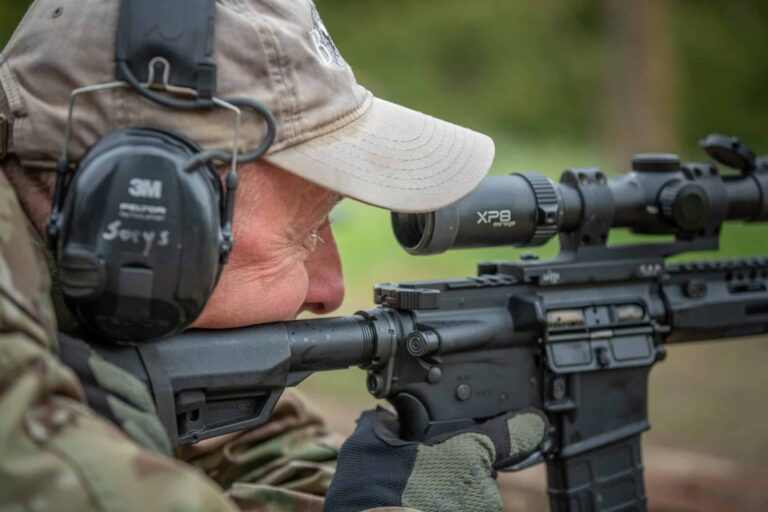
Low Power Variable Optics (LPVO) continue to dominate modern patrol rifle setups—and for good reason. As more agencies adopt LPVO-equipped rifles, the demand for structured, defensible LPVO instructor training is growing rapidly.
A well-designed LPVO instructor curriculum does more than teach optic manipulation. It builds competent leaders who can implement, sustain, and defend a professional training program inside their agency.
This article breaks down the essential elements of a comprehensive LPVO instructor curriculum and explains how to build lasting capability—not just technical proficiency.
LPVO systems introduce complexity beyond traditional red dot optics. Magnification management, reticle subtensions, ballistic holds, optic offset, and target discrimination all require deliberate instruction.
Without a structured LPVO curriculum:
Liability exposure increases
A formalized LPVO instructor framework ensures:
Command-level defensibility
For agencies adopting LPVO platforms, structured instructor development is no longer optional—it is operationally necessary.
An LPVO instructor must possess more than shooting ability. They must understand how to teach optic employment within an operational context.
1. Technical Mastery of LPVO Systems
2. Applied Precision Rifle Fundamentals
3. Information Processing & Threat Identification
One of the greatest advantages of LPVO optics is enhanced visual processing. Instructors must teach:
LPVO employment is as much about information dominance as it is about shot placement.

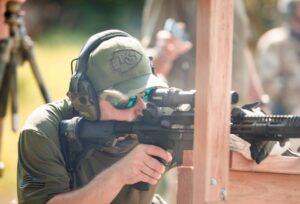


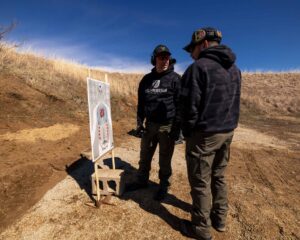
A comprehensive LPVO instructor program should follow a progressive structure that builds from foundational knowledge to full program implementation. It begins with LPVO fundamentals such as optic function, mounting, zeroing, and offset validation, then advances into reticle application and ballistic strategy for engagements out to 400 yards. From there, instructors develop dynamic optic manipulation skills, including magnification management and multi-threat engagement, followed by low-light LPVO employment focused on positive identification and shot accountability. The final phase emphasizes program development—establishing standards, qualifications, sustainment plans, and command support—transforming skilled shooters into capable program leaders.
The most effective LPVO instructor courses rely on blended instruction that combines classroom theory, live-fire application, guided repetitions, and scenario-based problem solving. Technical knowledge alone is not enough—students must see the skill performed correctly, practice it under supervision, and then demonstrate independent competence.
At High Threat Training Group, we structure instruction using the EDGE teaching method—Explain, Demonstrate, Guide, Enable—a proven skill-development model widely used in Scouting America. Instructors first explain the concept to establish understanding. They then demonstrate the task step-by-step, showing exactly what right looks like. Next, students are guided through structured practice with coaching and correction. Finally, they are enabled to perform independently, demonstrating mastery without assistance.
This instructor-led, progressive approach ensures students do more than understand LPVO mechanics—they internalize the skill, apply it under operational conditions, and leave prepared to teach it within their own agencies.
Our standards are grounded in proven practices, operational experience, and real-world conditions. They reflect what works in the field—not just what works on the range. However, every agency operates within its own legal framework, policy structure, and mission requirements. For that reason, each student is encouraged to use our framework as a foundation and then develop standards that align with their agency’s SOPs, state guidelines, and command expectations. The goal is not to impose a universal template, but to equip instructors with a defensible model they can adapt and implement responsibly within their own organization.
Effective LPVO training programs include:
Scenario-based evaluation
Instructor candidates should demonstrate:
Shot accountability
Clear standards strengthen defensibility and credibility.
The LPVO market evolves rapidly. Optic durability, reticle design, and mounting systems continue to improve.
To maintain relevance, agencies should:
Seek other training companies
A stagnant LPVO instructor curriculum creates operational risk. Continuous refinement builds resilience.
LPVO systems are not a trend—they are a permanent component of modern patrol rifle programs and have been around for many years. I started using LPVO on patrol and SWAT starting in 2017.
As adoption grows, structured LPVO instructor curriculum development will determine whether agencies build sustainable capability or inconsistent performance.
The agencies that prioritize professional LPVO training today will lead tomorrow.