Why Reality-Based Training Is Essential for Today’s Law Enforcement
Reality-based training has become essential for modern policing because officers will always fall to the level of their training. High-stress encounters are unpredictable, compressed in time, and cognitively demanding. As highlighted in Graham v. Connor, real incidents are “tense, uncertain, and rapidly evolving,” meaning traditional marksmanship or classroom training alone cannot prepare officers for real-world performance. Grey Group’s training methodology emphasizes behavioral science, stress inoculation, decision dominance, and scenario realism, ensuring officers develop the cognitive and tactical skillsets needed for today’s threats.
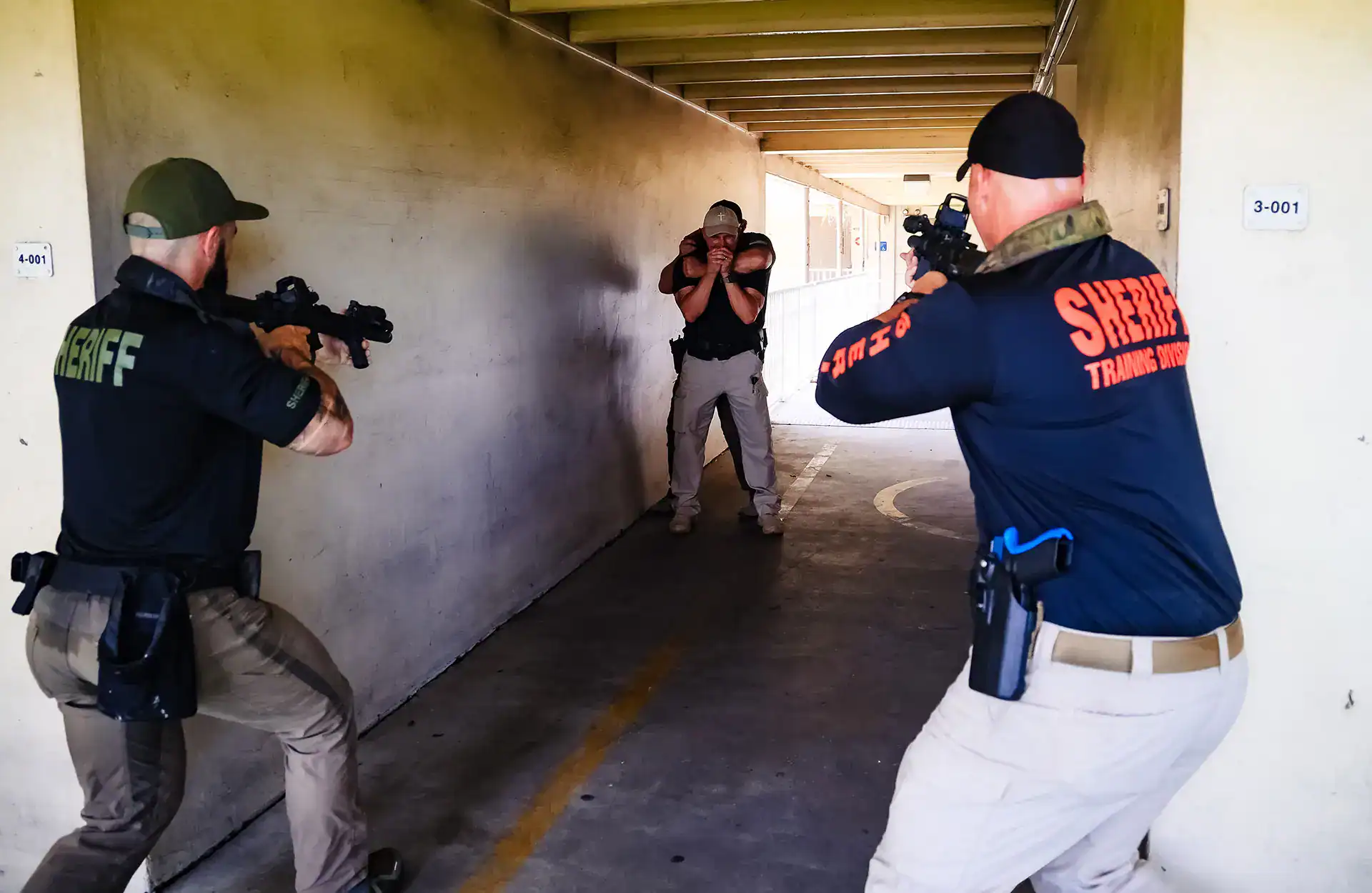
Law enforcement officers engaged in force on force training during vehicle suppression training.
Human Performance Under Stress: The Foundation of High Threat Training Group’s Training Philosophy
High Threat Training Group instructors explain that officers under acute stress experience reduced perception, narrowed visual focus, diminished working memory, and delayed cognitive processing. These S.I.T. factors—Safety, Information, and Time—directly impact performance. Reality-based training prepares officers to overcome these natural limitations through controlled exposure to stress, HUMINT-driven decision-making challenges, and time-compressed scenarios. At High Threat Training Group, every drill is engineered to simulate physiological and psychological responses officers will face in the field.
Realistic Scenarios That Reflect Real Operational Threats
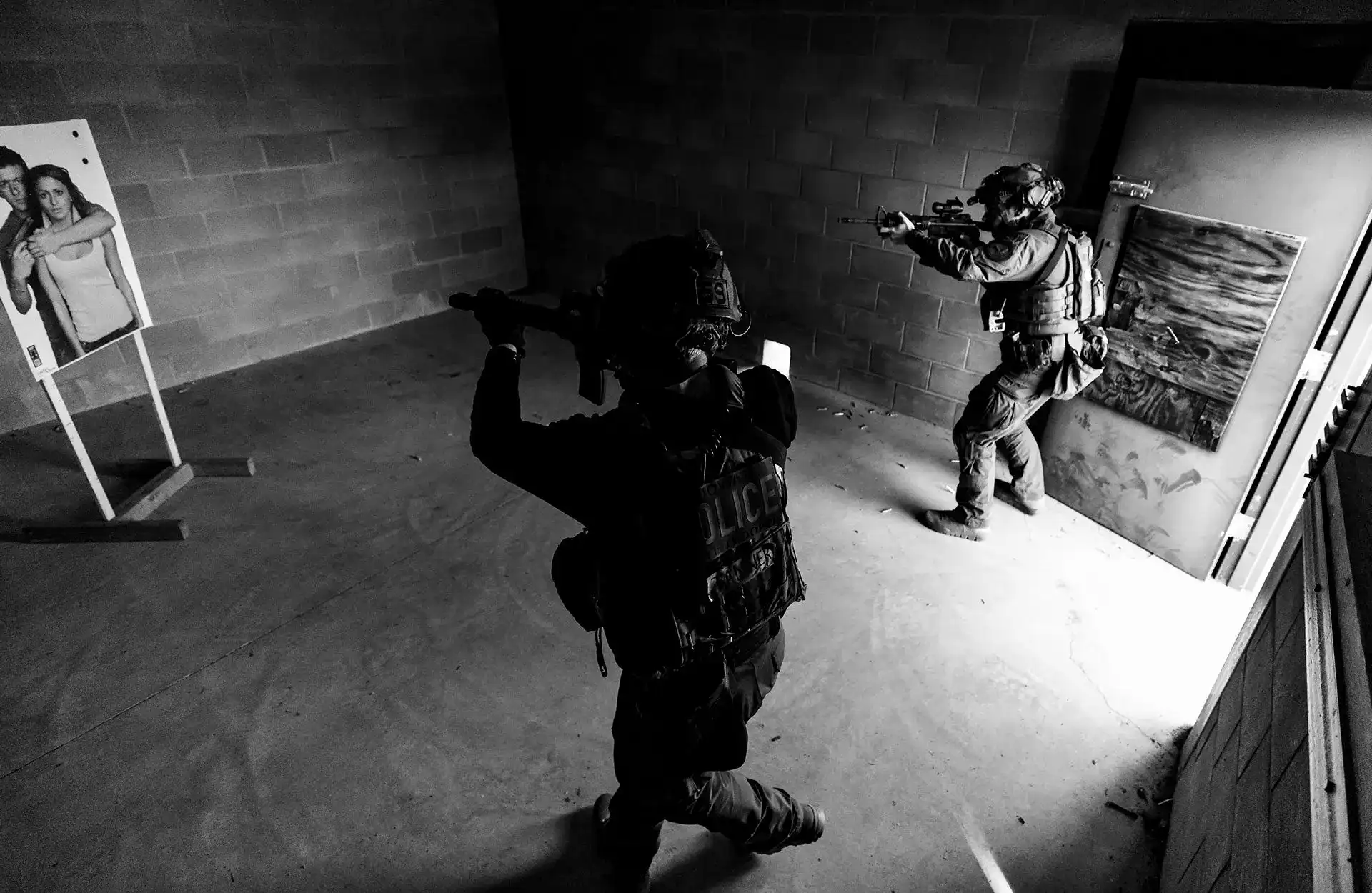
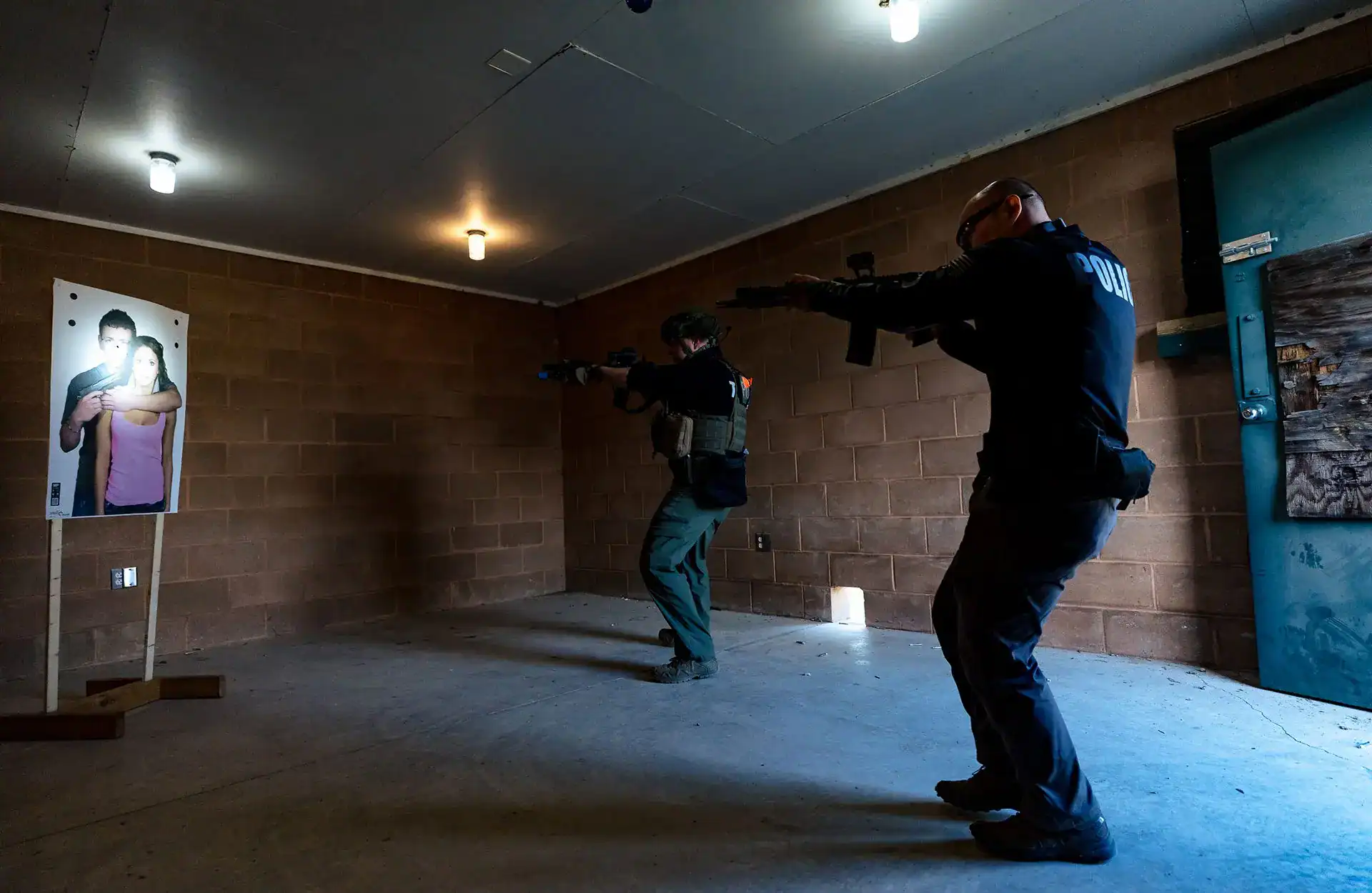
High Threat Training Group’s training environments mirror real-world threat conditions, incorporating hallways, intersections, T-junctions, furnished rooms, vehicles, stairwells, and low-visibility conditions. The courses identify critical danger areas using limited penetration tactics requiring angle management, and coordinated movement. Clearing rooms, open space requires decisive movement, and aggression. Each scenario forces officers to process evolving information, identify threats, and apply tactical judgment while communicating effectively under pressure.
Decision Dominance: The High Threat Training Group Difference
High Threat Training Group’s reality-based training focuses on producing officers who can make faster, safer, and more accurate decisions. Every scenario is designed to challenge cognition, communication, and spatial awareness. Officers must respond to evolving behavior, unexpected resistance, ambiguous threat cues, and rapidly changing environmental conditions. Debriefs focus on learning, retention, articulation, and real-world application—ensuring that every repetition builds confidence and competence.
As policing evolves, agencies need training that reflects the operational, cognitive, and environmental pressures of modern threats. High Threat Training Group’s reality-based training programs deliver this through evidence-backed tactics, pressure-tested scenarios, human-factor science, and a commitment to officer safety and professionalism. Agencies seeking to improve readiness, reduce liability, and strengthen officer performance will find reality-based training not just beneficial—but essential.